
Imagine unlocking your office or hotel room with just the touch of a finger, no keys required. As businesses and consumers increasingly prioritize convenience and security, fingerprint door locks are emerging as a cutting-edge solution for modern spaces. But what makes them so effective, and how can they reshape your security strategy?
The Growing Demand for Biometric Security Solutions
In 2023, the global biometric security market was valued at $42.9 billion and is projected to grow at a CAGR of 15.2% through 2030 (Grand View Research, 2024). This surge reflects increased adoption across industries like hospitality, office spaces, and residential applications. Fingerprint door locks, a subset of this market, have gained traction due to their ability to combine security with convenience.
Industry data from Statista shows that 68% of consumers prefer biometric authentication methods over traditional keys or passwords for entry systems. Products like the SKYSHALO Smart Door Handle offer advanced features such as fingerprint unlocking, passcode entry, and app-based management, catering to both individual users and businesses.
Applications for these locks are vast, ranging from hotel room doors to office meeting spaces, providing unparalleled flexibility. Businesses like 7STAR, offering ISO-certified security products, are stepping in to meet these growing demands.
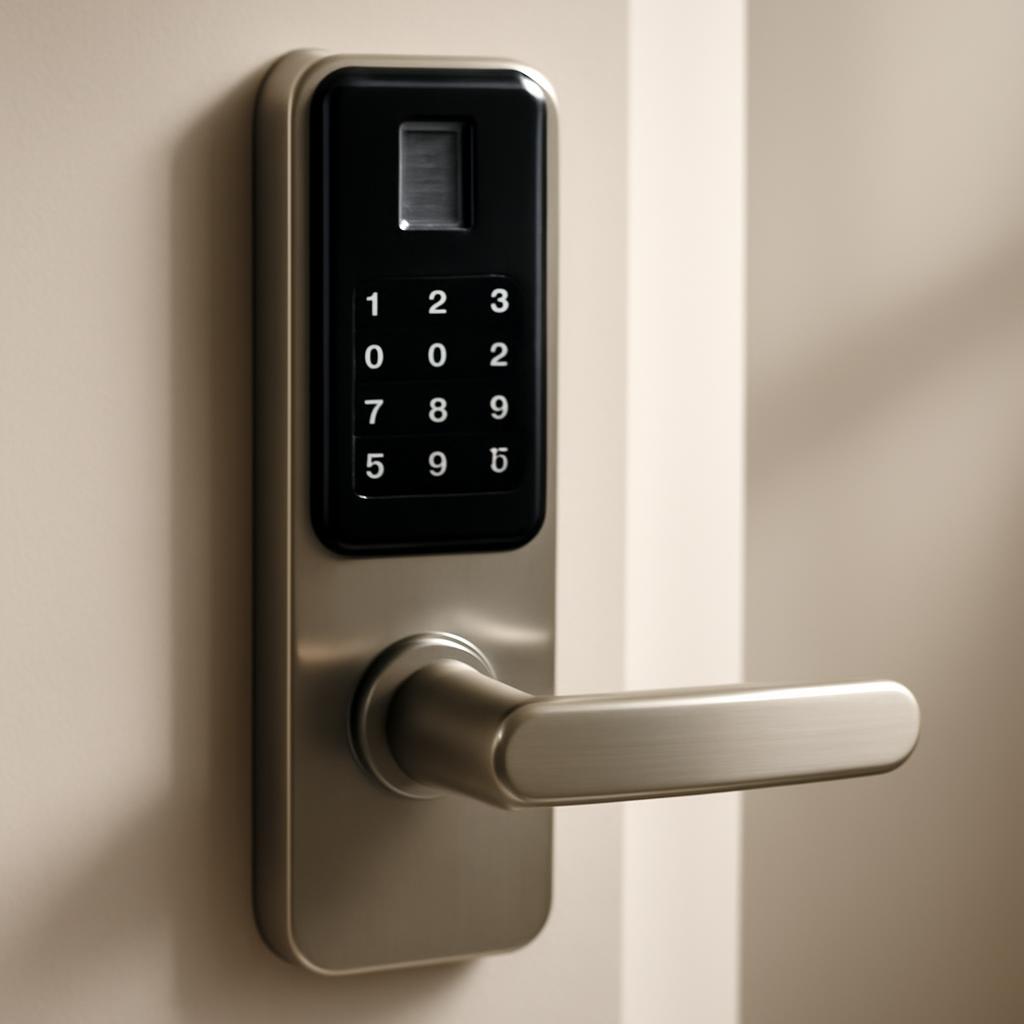
How Fingerprint Door Locks Work: Insights from Industry Experts
Fingerprint door locks utilize biometric authentication technology, scanning unique fingerprint patterns to unlock doors. “Unlike traditional locks, these devices eliminate the risk of lost keys or forgotten codes,” explains Dr. Sarah Lin, a security technology researcher. “They also integrate seamlessly with IoT platforms, enabling remote monitoring and management.”
Current models, such as the Geeni Biometric Knobs, boast a false acceptance rate of less than 0.001%, making unauthorized access virtually impossible (McKinsey, 2024). These locks often come with backup options like physical keys or passcodes, ensuring functionality even during power outages.
Moreover, advanced features like dual-authentication pairing – requiring both fingerprint and passcode – are becoming standard in premium models.
Regulatory Standards and Certifications to Watch For
When selecting fingerprint locks for your business, regulatory compliance is paramount. Look for certifications such as ISO 9001 for quality management systems and ISO 27001 for information security. For businesses operating in the U.S., ensure your chosen products meet FCC standards for electronic devices.
Manufacturers like 7STAR offer fingerprint door locks that are GMP-compliant and FDA-registered, ensuring robust build quality and longevity. For example, their SKYSHALO Smart Handle is tested for durability under ASTM international standards, guaranteeing functionality across diverse environments.
Implementation Guide: Choosing the Right Fingerprint Door Lock
To implement fingerprint locks successfully, consider these steps:
- Assess Your Needs: Determine the number of locks required and the features most important to your business, such as app integration or dual-authentication.
- Choose Trusted Brands: Opt for established manufacturers like Geeni or SKYSHALO, known for reliable and certified products.
- Installation: Ensure professional installation to prevent alignment issues that could affect fingerprint recognition.
- Maintenance: Regularly clean sensors and update firmware to maintain optimal performance.
By following these steps, businesses can reduce operational inefficiencies and enhance security.
Future Trends in Fingerprint Door Locks
The future of fingerprint locks lies in enhanced connectivity and personalization. A 2024 study by Euromonitor predicts that over 75% of biometric locks will integrate with smart home ecosystems within the next five years, allowing users to control locks via voice commands or mobile apps.
For businesses, this means greater scalability and data insights. Imagine tracking entry logs or customizing access permissions for staff – all from a centralized dashboard. Partnering with innovative manufacturers like 7STAR ensures access to these cutting-edge advancements.
Ready to future-proof your security? Explore advanced solutions like the SKYSHALO Smart Handle today.
Frequently Asked Questions
Are fingerprint door locks any good?
Fingerprint door locks are widely regarded as an effective security solution. Their biometric technology ensures that only authorized users can gain access, eliminating the risks associated with lost keys or copied passcodes. Studies show that biometric locks reduce unauthorized access incidents by up to 90%. When selecting a lock, ensure it includes backup options like manual keys to enhance reliability. Brands like Geeni and SKYSHALO are known for their high-quality models with advanced features.
What are the disadvantages of fingerprint locks?
While fingerprint locks offer superior security, they do have limitations. Sensors can malfunction due to dirt or moisture, making regular cleaning essential. Additionally, power outages may render electronic locks temporarily inoperable, though many models include backup options like physical keys or passcodes. For added reliability, choose locks with certifications such as ISO 27001 and FCC compliance.
Who makes the best fingerprint door lock?
Several manufacturers are recognized for producing top-tier fingerprint door locks. Brands like SKYSHALO and Geeni are industry leaders, offering models with advanced features like dual authentication and app integration. For businesses seeking scalability, 7STAR provides certified options with factory-direct pricing and low MOQ starting at 500 units, ensuring quality and affordability.
How long do fingerprint door locks last?
The lifespan of fingerprint locks depends on build quality and usage. High-quality models like those offered by Geeni and SKYSHALO are tested to withstand over 100,000 entry cycles, translating to years of reliable service. Regular maintenance, such as cleaning sensors and updating firmware, can further extend longevity. Always opt for locks with ISO certifications to ensure durability.
Can fingerprint door locks be used for bedrooms?
Yes, fingerprint door locks are ideal for bedrooms, offering enhanced security and convenience. Models like the OFFTV Fingerprint Door Lock are specifically designed for residential use, ensuring easy installation and reliable performance. These locks often feature compact designs, making them suitable for bedroom doors without detracting from aesthetics. For compatibility checks, consult with manufacturers like SKYSHALO.
What is the installation process for fingerprint door locks?
Fingerprint door lock installation typically involves mounting the lock onto the door and ensuring proper sensor alignment. Professional installation is recommended for optimal performance, as improper setup can affect fingerprint recognition. Many manufacturers offer installation guides or videos, such as those provided by SKYSHALO and IRONZON. For businesses ready to upgrade, partnering with experienced manufacturers like 7STAR ensures seamless integration and support.